Printing the Tui and Duck pieces

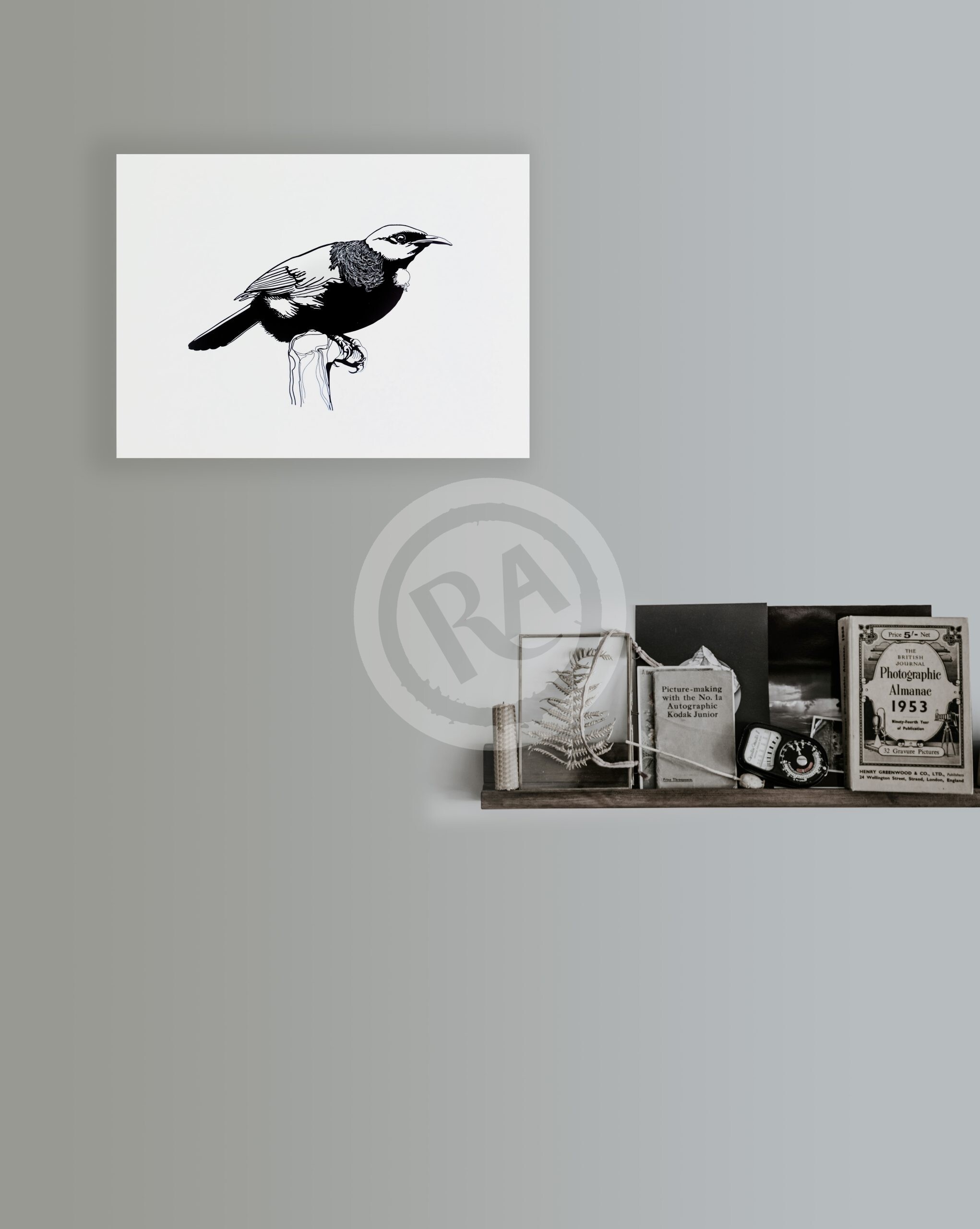
As we have been sorting out various mechanical and technical issues, printing the bird series has been delayed for seems like forever. But this week, we have take off! The first off the press are the large Tui and Duck prints, which sport one colour so far.
RA_TuiLargeRoomBW

As we have been sorting out various mechanical and technical issues, printing the bird series has been delayed for seems like forever. But this week, Tui and Duck have take off!

The first off the press are the large Tui and Duck prints, which sport one colour so far. The plan is to hand wash them with highlights or backgrounds, so they should look pretty special. Anyway, here’s a wee video as a taster of what is to come later in the series.

Check out the Tui and Duck print variants at these links.

Share:

More Posts

LTWEnounter4

Lighting the way

The series presents a historical narrative that traces early contact between representatives of the British Crown, clergy associated with Church Missionary Society (based in London, England), and Māori chiefs of the far north of Aotearoa New Zealand of the early 1800s. The encounters occur prior to the signing of the Treaty of Waitangi in 1840 and illustrate how an influential outcome of the early relationship between key participants was the development of a unique alphabet for the Māori language and the printing of religious texts in the Māori language.
The importance of these developments are presented against a backdrop in which communication between Māori and the first settlers, the whaling fleets traversing the Pacific, and the fledgling forestry industry, was strained by the lack of understanding of cultural protocols, hierarchy, and language.
While Māori orthography, Tikanga Māori, has been recorded by various individuals, this paper focuses on the relationship between Rev. Thomas Kendall, and Arikinui (high chiefs) Te Morenga and Waikato of Taiamai/Ngā Puhi. These leaders were future focused and undertook to establish the pathway for the first hand written and printed texts for Māori, in their own language.

Read More »
Figure 2(h) White

Tae ki te toi: Colour in pre-European Māori art

In his paper, “On the fine perception of colours etc.”, William Colenso describes the use of colour by pre-European Māori from his first-hand experience of having met and observed the work of elderly Māori still alive at the time. The legacy he provides offers a rare glimpse into how ancient Māori created and used colour, shape, and texture for various purposes. We have tried to bring to life Colenso’s legacy by applying elements he describes in a contemporary frame; using colours described, creating letterpress printing inks from natural sources to produce prints, making use of printing substrates made from locally produced materials, iconographic representations of the source materials and artefacts produced by those that Colenso worked with.

Read More »

Send Us A Message