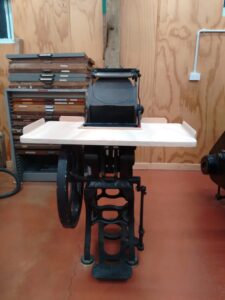

The series presents a historical narrative that traces early contact between representatives of the British Crown, clergy associated with Church Missionary Society (based in London, England), and Māori chiefs of the far north of Aotearoa New Zealand of the early 1800s. The encounters occur prior to the signing of the Treaty of Waitangi in 1840 and illustrate how an influential outcome of the early relationship between key participants was the development of a unique alphabet for the Māori language and the printing of religious texts in the Māori language.
The importance of these developments are presented against a backdrop in which communication between Māori and the first settlers, the whaling fleets traversing the Pacific, and the fledgling forestry industry, was strained by the lack of understanding of cultural protocols, hierarchy, and language.
While Māori orthography, Tikanga Māori, has been recorded by various individuals, this paper focuses on the relationship between Rev. Thomas Kendall, and Arikinui (high chiefs) Te Morenga and Waikato of Taiamai/Ngā Puhi. These leaders were future focused and undertook to establish the pathway for the first hand written and printed texts for Māori, in their own language.