Korrex Berlin Special Hand letterpress breakdown

As any who run an older machine of any kind, there are challenges in keep them operational. So it was when we were about to start printing the Fennel series that instead of the satisfying whir of the inking drum motor, there was a single ominous click, then ... nothing. 
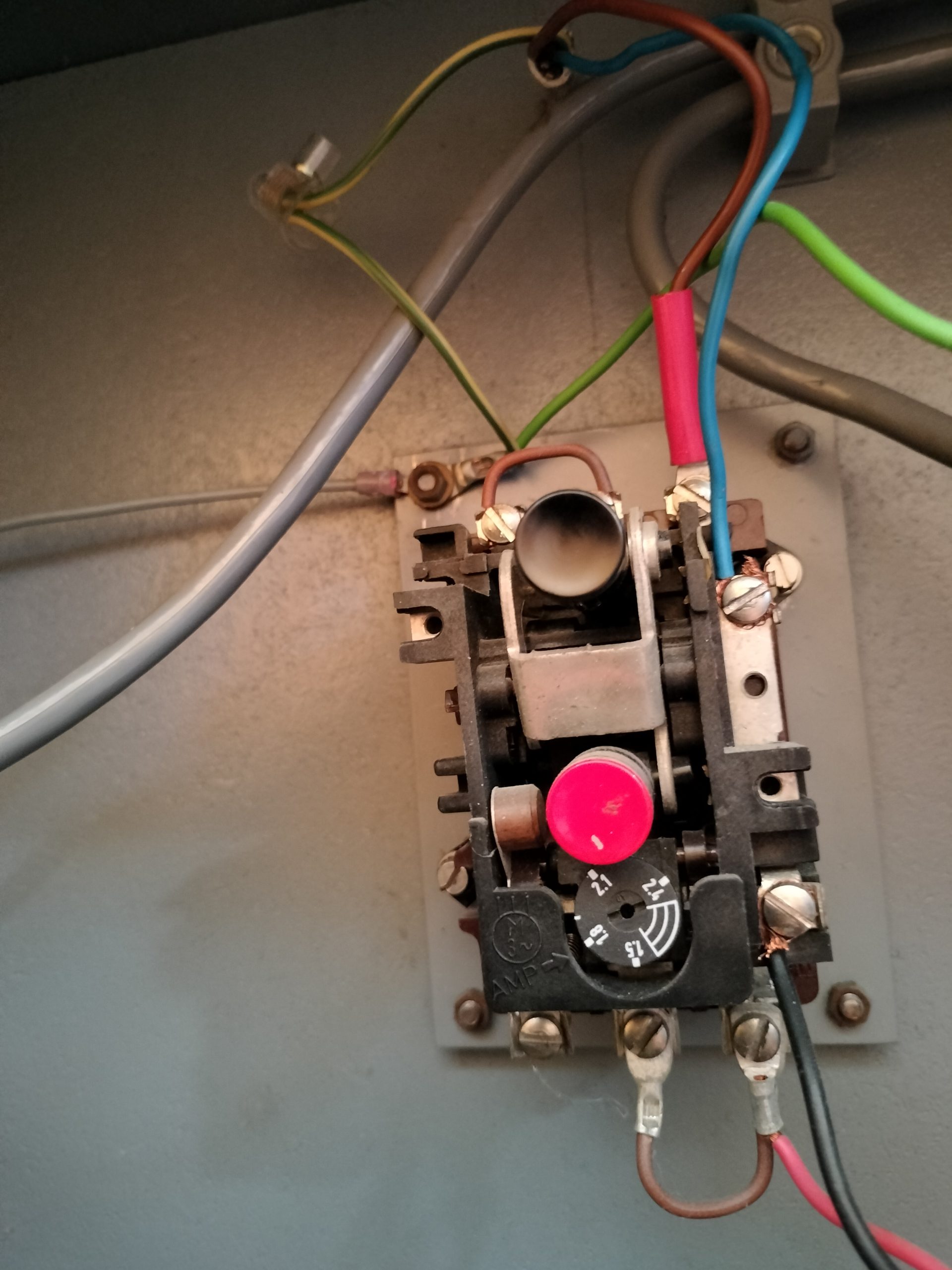
Circuit breaker internals

As any who run an older machine of any kind like the Korrex Berlin Special Hand, there are challenges in keeping them operational. So it was when we were about to start printing the Fennel series that instead of the satisfying whir of the inking drum motor, there was a single ominous click, then … nothing.

Problem solving process begins, power supply is good, there’s no ozone or smoke, and the press is getting power. Our guess is that the press circuit breaker switch has failed, but we are not electricians and as this is an industrial machine, we don’t want to take the risk of causing harm to the machine or ourselves. So we call in the electricians who go through various tests, declaring the problem is definitely in the motor, disregarding our suggestion that it was more likely to be the circuit breaker switch that was causing the detected dead short. The problem of course, is that the motor and gearbox is specific to the press and it is unlikely that a replacement can be found. Searching for electric motor rewinders, we find Bay Rewinds and take the motor and box there. Barely a couple of days later we get a call, to our relief, that the motor is in fact, in excellent condition for its age and they have taken the opportunity to update some internal switch gear to meet modern requirements.

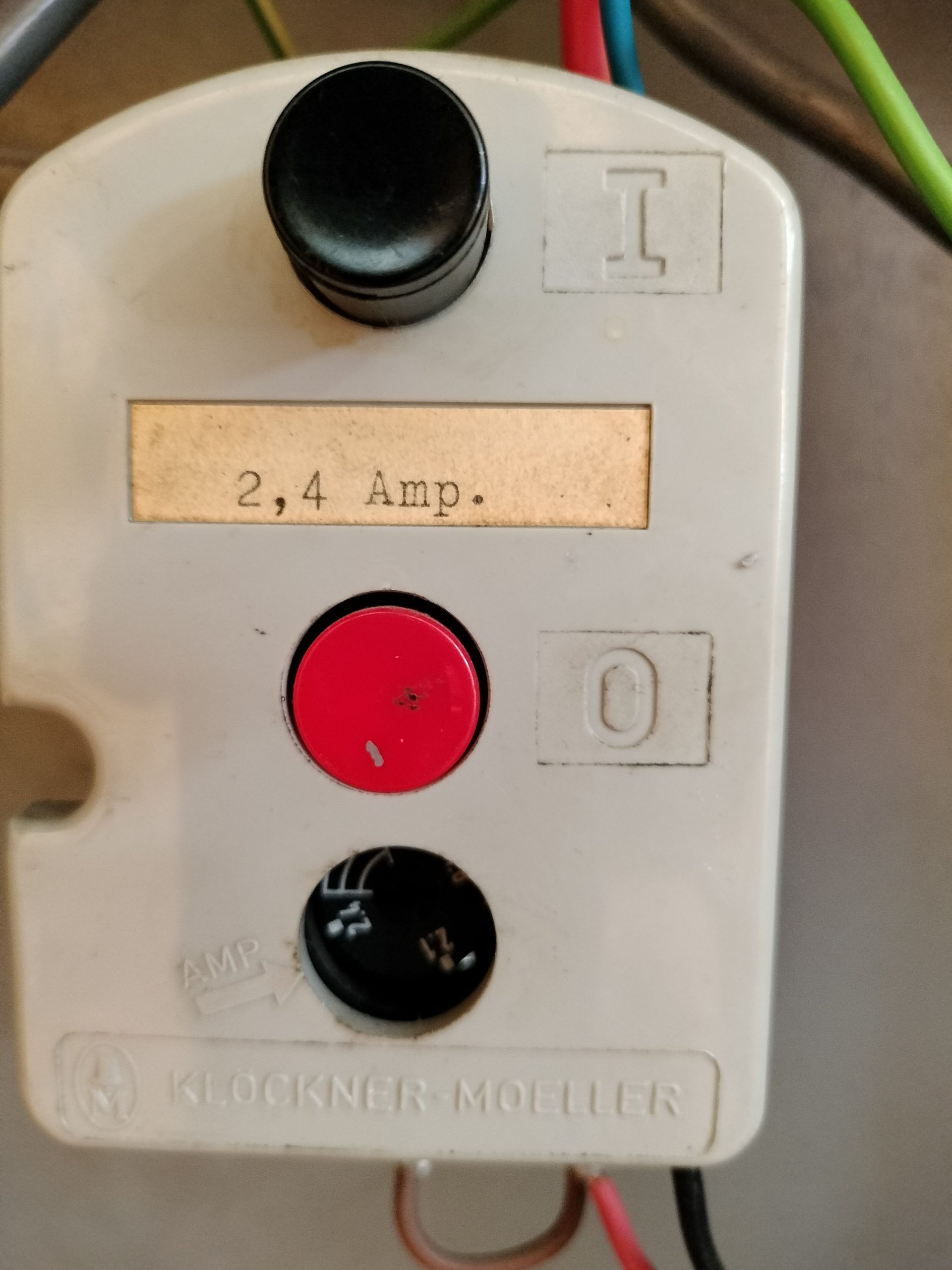
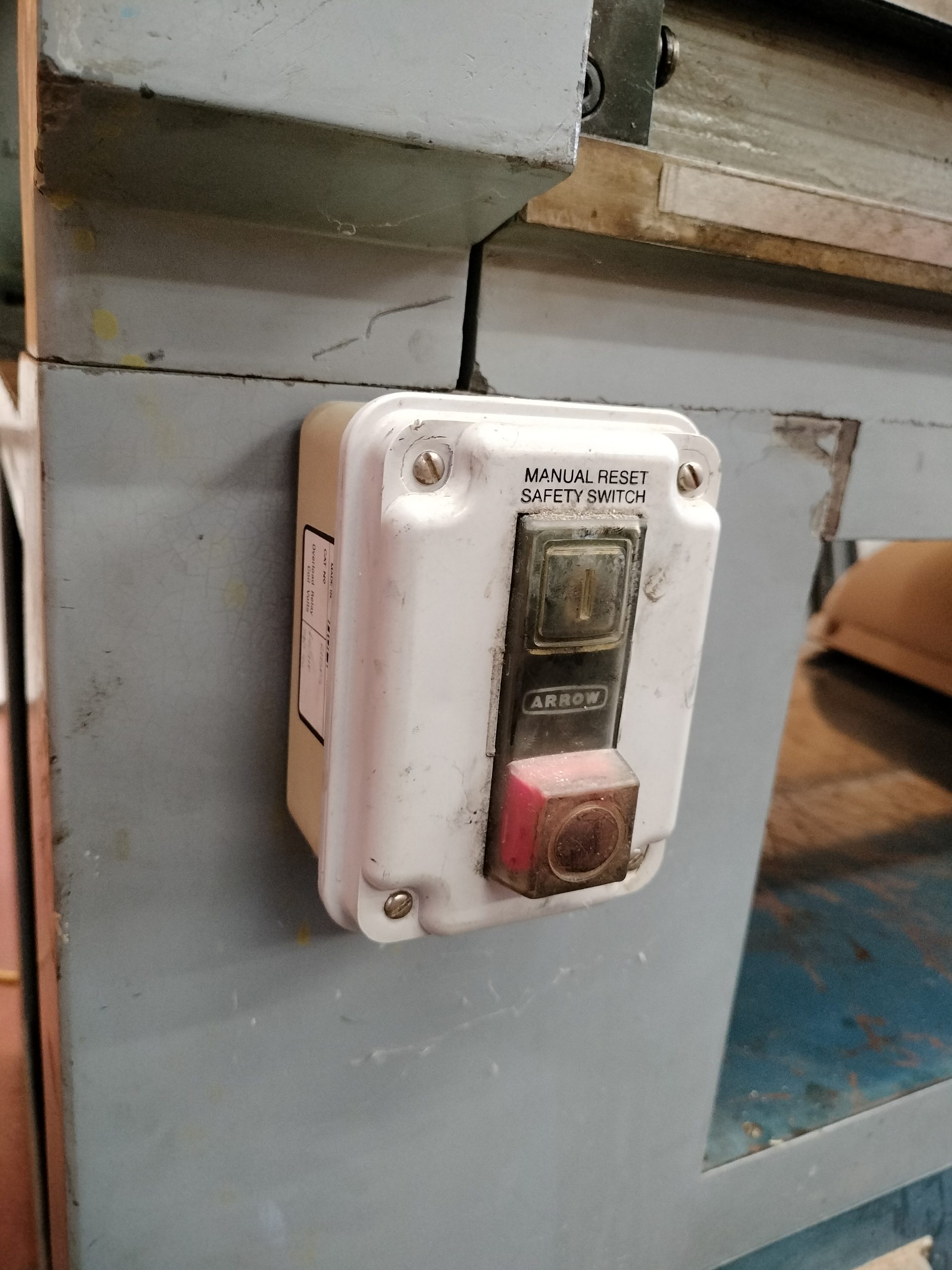
Given the motor is good, then why does the press not run? After some discussion with Bay Rewinds, the circuit breaker and operation switch are removed and delivered. As it turns out, our initial suspicion is confirmed to be true. In addition, another circuit breaker had been fitted inside the operation switch enclosure. So, how do we replace a 50 year old circuit breaker? A long search through the complex world of industrial electronics brought us to the Klockner-Moeller PKZM range, with the appropriate model valued in excess of NZ$270. Alternatively, since this is merely a circuit breaker, a $60 and smaller component could be fitted inside the operation switch, replacing the oddly placed circuit breaker already there.
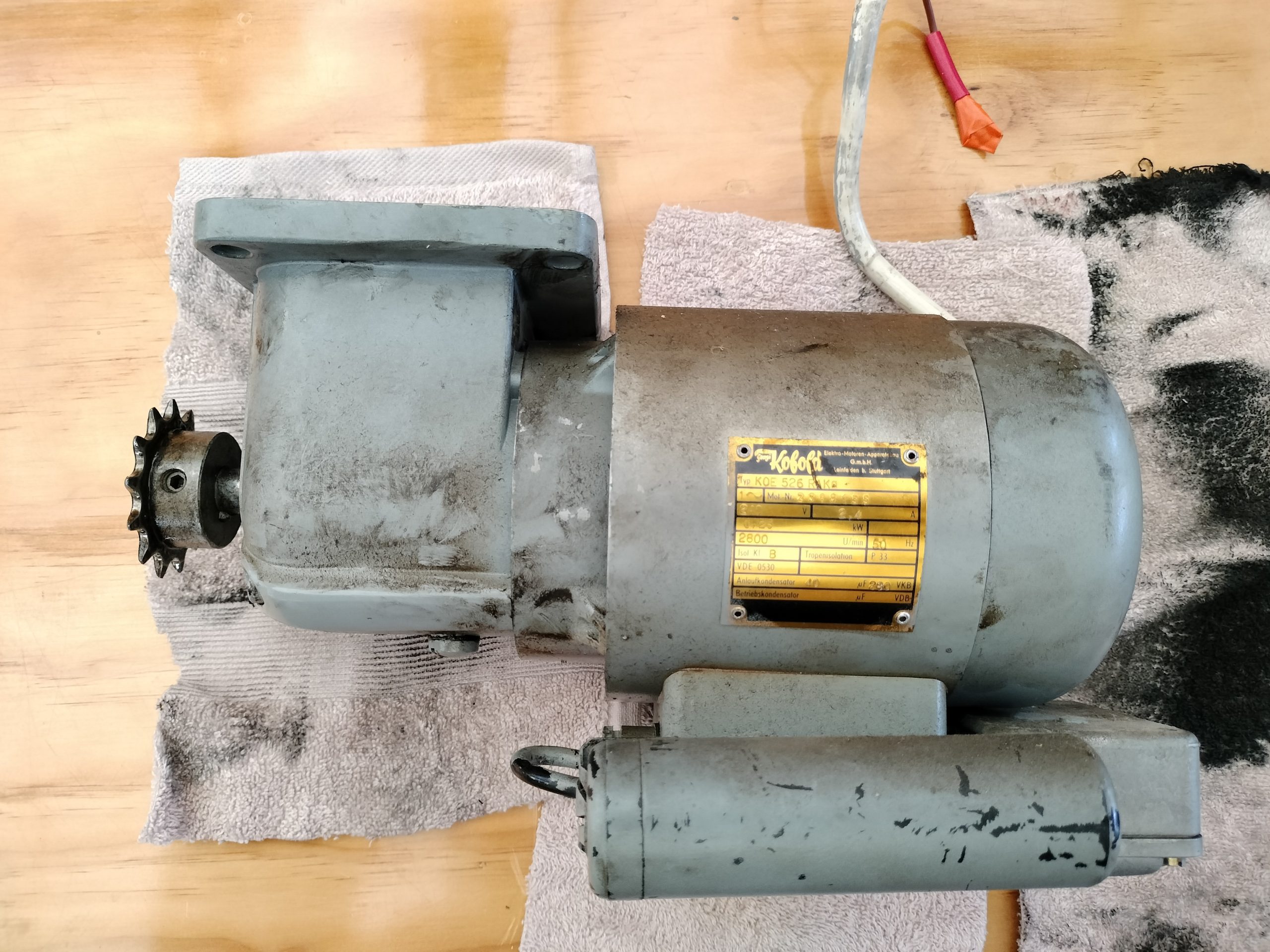
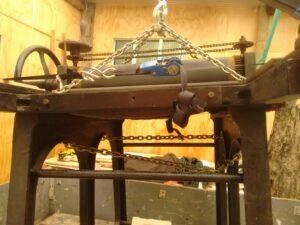
Three weeks later, with the motor carefully reinstalled and the drive chain tensioned, the operation switch wired in, the failed circuit breaker no longer in the circuit, and with the inking drum whirring nicely, we are back in action.
Share:

More Posts

Figure 2(h) White

Tae ki te toi: Colour in pre-European Māori art

In his paper, “On the fine perception of colours etc.”, William Colenso describes the use of colour by pre-European Māori from his first-hand experience of having met and observed the work of elderly Māori still alive at the time. The legacy he provides offers a rare glimpse into how ancient Māori created and used colour, shape, and texture for various purposes. We have tried to bring to life Colenso’s legacy by applying elements he describes in a contemporary frame; using colours described, creating letterpress printing inks from natural sources to produce prints, making use of printing substrates made from locally produced materials, iconographic representations of the source materials and artefacts produced by those that Colenso worked with.

Read More »

Renovating the TH Pullan & Sons Proofing Press

TH Pullan & Sons were an engineering company in Glasgow that specialised in printing machinery and proof presses. They went into liquidation c.1906, so it is difficult finding any actual information about the company or their products.

This press is a wonderful example of industrial revolution engineering. Fully hand crafted and even after years of misuse and neglect, is still completely flat and square.

Read More »
LTWEnounter4

Lighting the way

The series presents a historical narrative that traces early contact between representatives of the British Crown, clergy associated with Church Missionary Society (based in London, England), and Māori chiefs of the far north of Aotearoa New Zealand of the early 1800s. The encounters occur prior to the signing of the Treaty of Waitangi in 1840 and illustrate how an influential outcome of the early relationship between key participants was the development of a unique alphabet for the Māori language and the printing of religious texts in the Māori language.
The importance of these developments are presented against a backdrop in which communication between Māori and the first settlers, the whaling fleets traversing the Pacific, and the fledgling forestry industry, was strained by the lack of understanding of cultural protocols, hierarchy, and language.
While Māori orthography, Tikanga Māori, has been recorded by various individuals, this paper focuses on the relationship between Rev. Thomas Kendall, and Arikinui (high chiefs) Te Morenga and Waikato of Taiamai/Ngā Puhi. These leaders were future focused and undertook to establish the pathway for the first hand written and printed texts for Māori, in their own language.

Read More »

Send Us A Message