This paper, Lighting the Way, was submitted to the Impact 10 conference, 2018, in Santander, Spain and is presented here with some changes.
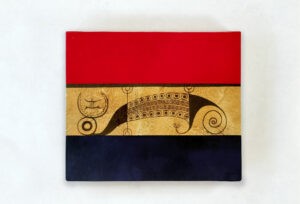
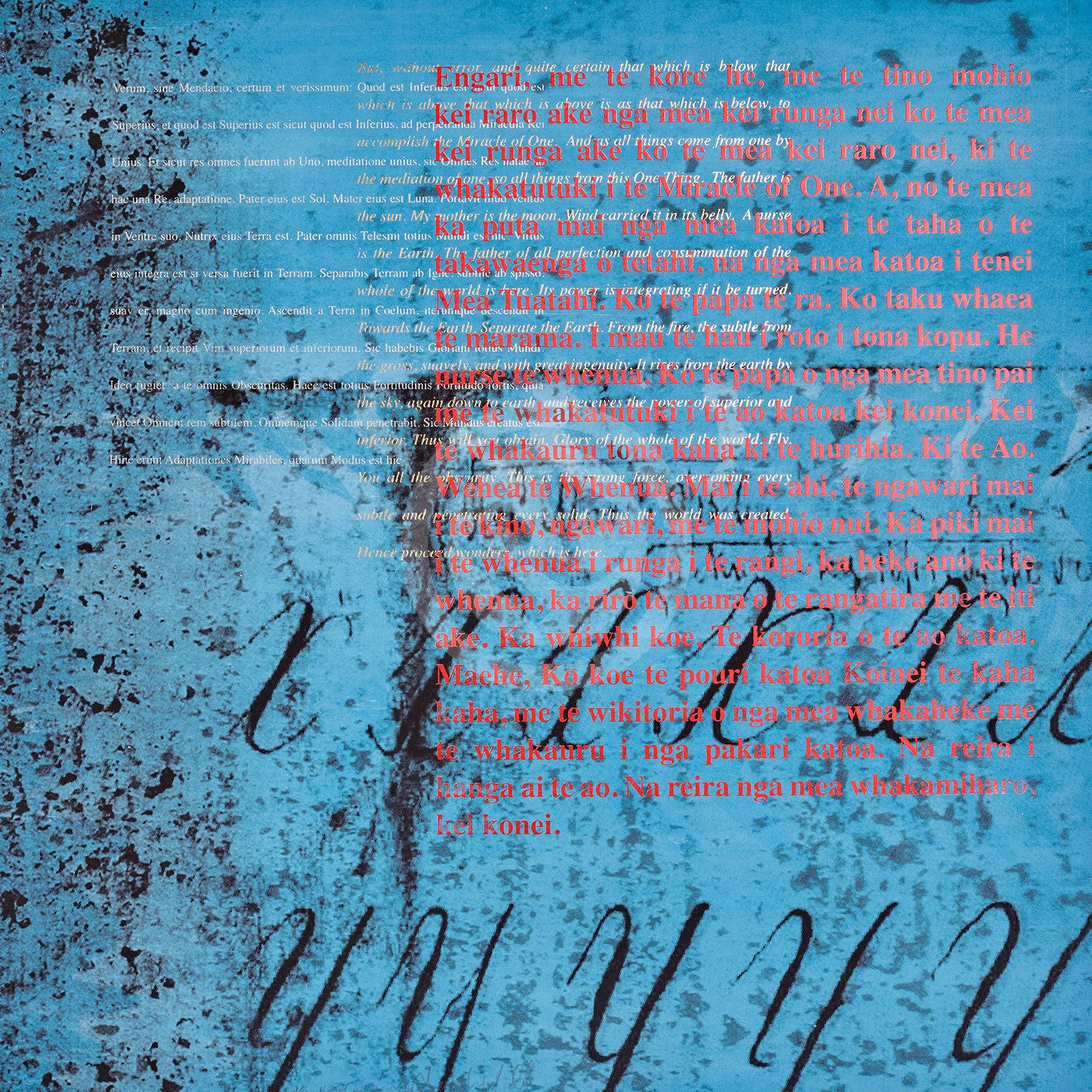
The writing was accompanied by three exhibitions, of which the pieces available on this site comprise one of the exhibitions.
By Dr Alan Litchfield and Karol Wilczynska
Introduction
The work prepared and subsequently published from the work of the missionary, Thomas Kendall has enabled an oral language to be consistently expressed in written form where contemporary missionaries tended to merely transliterate from English, creating many inconsistencies. This created some confusion and discord. However, without the grammar and vocabulary work, publishing Māori songs, litany, speeches, and the first Maori bibles would not have existed then or today.
The introduction of early printing into New Zealand presents as a backdrop of competing desires, aims, and intentions. The efforts of individuals notwithstanding, early printing coincided with the creation of a native Māori alphabet, grammar and lexicon. It was this that led the way to subsequent identification of cultural awareness by Māori today. As is often the case in historical traces, the path is not straight and contains cul-de-sacs of failed dreams.
European incursions into the Pacific region have a substantial history. The impetus is typically economic or religious gain. Though earlier European visitors to the South Pacific had started to collect the language of the Māori, Te Reo, these attempts were sparse and writing them involved an entirely phonetic means of spelling. Consequently, the earliest writings can be quite difficult to understand now without knowing the foreign accents involved. Since the Māori themselves did not possess their own written form of language, knowledge was transferred orally and held in reserve as body markings, carved and woven panels, and in the names given to places following events, legendary and concurrent (Litchfield, 2005).
The Māori grammar
To assist with English and European expansion, the Māori language needed to be understood and thus develop a written lexicon. As instigators, the evangelical protestant church missionary represented the colonial power of the British empire. The manner of instruction for Māori was different to Australia, where New Zealand initially had a mobile European and American population and later missionaries and working-class settlers. Whereas the Australian settlement was more organised with convicts, military warders, and low-cost settlers. The treatment of the indigenous population was consequently barbaric. In New Zealand, while the determination to preach the sacrament, Christian instruction, and civil improvement was important for the church, it was not sanctioned by Crown. Also due to colonial arrogance, Tikanga Māori was not a priority for the Church Missionary Society (CMS). During this time, Europeans treated Māori as inferior beings, for example whalers and sealers would sail into the northern harbors, raid the communities of their crops, kidnap young men to use on the ships, and abuse both men and women (Salmond, 2017).
In late 1814, Thomas Kendall, a school teacher in Christian lessons and appointed Justice of the Peace, with William Hall and John King, were dispatched by the CMS to live amongst the Māori. They accompanied Mardsen because he had connections with rangatira to arrange access to land and open dialogue. Kendall was assigned as schoolteacher for the missionary children as well as Māori. On their arrival in Rangihoua Bay, Bay of Islands, they found there were no provisions for dwellings (timber) and all negotiations were held between Marsden and the Māori chief, Ruatara. Therefore, Kendall and Hall went about the establishment of missionary dwellings and teachings for the CMS. During this time, Kendall worked closely with some of the Māori men and started to develop a rudimentary understanding of Te Reo. As Justice of the Peace, Kendall gained their trust by securing the release of young Māori forced to live aboard whalers’ and sealers’ ships (Moon, 2015).

Overtime, Marsden became an influential figure but being based in New South Wales, he had to be escorted around, informed about teaching, trade, converts, and so on when visiting New Zealand. In 1816, he travelled between the Bay of Islands to Kaipara, to the Hauraki Gulf, Waikato, Coromandel, and Tauranga with Te Morenga as his guide and interpreter. Te Morenga introduced Marsden to many Arikinui. Te Morenga subsequently travelled with Marsden to Sydney where he encountered European developments useful for his people (Jones & Jenkins, 2017). While Te Morenga admired the European means of agriculture, medicine, and schooling, he also witnessed European behaviour and greed (Nicholas, 1817) so he insisted that his children learn to speak English and become literate so they would not be ignorant of European ways.
A widely used deception by English-based missionaries, to satisfy the spread of religion and the power of the Crown as a utilitarian pretext, was that a person’s worth is put to work as a measurable economic unit for the CMS and to accumulate the souls of savages (Ballantyne, 2014). Thus, Marsden was interested in adaptability of Māori to become a working-class labour force, a Dickensian environment considered from out of industrial England. One of the ways to achieve this goal was to preach gospels and sermons in the native tongue. This role was passed on to Kendall. He argued that the most rapid means of civilizing Māori was for him to mingle among them (Binney, 2005).
However, missionaries had little financial support from the CMS and set out, without theological or linguistic training, to introduce religion through piety and work. They were working-class trades people and worked with what they brought with them, found, or made. It was this process of building the mission, understanding the culture of the Māori, giving instruction to the children, and communicating with the adults, that the genesis of a Māori text was formed (Parkinson, 2003).
Thus, the foundations of New Zealand’s first book provided a context for the vocabulary lists in Kendall’s letters to Josiah Pratt and Kendall’s lessons for Māori in “A korao no New Zealand”. This work was an elementary primer comprising alphabet and numbers, syllables, numbered exercises, word lists and sentence exercises, a short dictionary, common parts of speech, and a few explorations of syntax. At the end of the publication, there are phrases translating Māori and English. Since no facilities existed in New Zealand to print the book, it was sent to Sydney.
By the time a school house was opened in 1816 (Jones & Jenkins, 2016), Kendall was fluent in Te Reo and preparations for another text was well underway. In 1819, after writing to CMS, Kendall left for England with two Māori rangatīra, Hongi Hika and Waikato, to pursue the grammar and seek ordination from the CMS. During the voyage, Kendall and Waikato met each day to discuss and refine the manuscripts. But once in England, Kendall was not a linguist and sought help from Samuel Lee at Cambridge University to refine the work. The publication was prepared and ready for print in London in 1820 and published by the CMS. A preface written by Professor Lee stated the work was prepared in unfavorable circumstances and the work is of reasonable extent and accuracy (Kendall, 1820). The book was of interest to other missionaries and settlers so several times, Kendall requested the work be reprinted in Sydney and with alterations, but this was never done and his work was eventually lost and was not printed in his lifetime.

Kendall had committed the sin of ‘going native’, with CMS accusing him of having “the absence of self-restraint, arising from his long residence among a barbarous people, which renders it difficult to control him” (Parkinson, 2003, p91). So, while the CMS claimed authorship of “The Grammar and Vocabulary of the New Zealand Language” acknowledging the work of Professor Rev. Samuel Lee and Rev. John Pratt, it is largely the work of Kendall. Kendall had prepared all the Māori translations, vocabularies, praxis, and dialogues, along with sacred writings in Māori and English. The intellectual ownership of the work clearly sits with him, however CMS put the work to press in England removing his name from the 230-page volume (2003).
After the first printing of the Māori Grammar and Vocabulary, CMS decided to send a small hand press to New Zealand with William Yate to print materials for the missionary families and Māori. Yate arrived in Kerikeri in 1830 and set up work in the mission general store. Yate was no printer and found the task difficult and time consuming. He prepared hymn sheets and a six-page catechism, of which only one survives. The press was sold and was used to print newspapers, then removed from New Zealand in 1844.
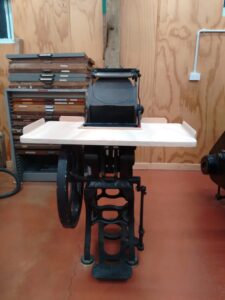
At the end of 1833, the CMS dispatched an expert printer and missionary, William Colenso, to the Bay of Islands mission with appropriate press and materials. Colenso presented his needs but the CMS proceeded to order materials as they saw fit: A large Stanhope press with heavy boxes of type, bookbinding materials, a guillotine, and associated tools (McKay, 1940). When Colenso arrived in 1835, he needed to shore the cargo in lighters, however he was missing wooden and metal furniture, quoins, galley cases, leading, brass rules, compositing sticks, inking table, potash, brushes, mallets, roller irons, and paper stocks.
The village of Paihia included dwellings for a carpenter and blacksmith, a storehouse, a Chapel, and schoolhouse. The press was set up in a large and well-lit room on the route that many Māori travelled. Colenso realised that Māori needed fewer characters than English and so designed a new type case.
The first major editions of the hand printed and bound books by Colenso were created to establish Christian texts of the New Testament in Māori. The first impression of a newly translation of Ko te Rongo Pai i tuhituhia e Ruka (The Gospel written by Luke) and Ko nga Pukapuka O Paora te Apotoro ki te Hunga o Epeha, O Piripai (The Books of Paul the Apostle to the Ephesians, The Epistle) was pulled on 17 February, 1835. By 21 February, 25 correct copies were printed and stitched, cut and ready for use by the missionary families. As knowledge of this spread, orders increased rapidly, and the press was fully engaged, printing 5,000 copies to late 1837.

References
Ballantyne, T. (2014). Entanglements of empire: missionaries, Māori, and the question of the body. Durham: Duke University Press.
Binney, J (2005). The Legacy of Guilt. A life of Thomas Kendall. Wellington, New Zealand: Bridget Williams Books Limited.
Jones, A., & Jenkins, K. (2016). Bicentenary 2016: The First New Zealand School. New Zealand Journal Of Educational Studies, 51(1), 5. doi:10.1007/s40841-015-0026-8
Jones, A., & Jenkins, K. (2011). Words between us: first Māori-Pākehā conversations on paper = He Kōrero. Wellington, N.Z.: Huia.
Jones, A., & Jenkins, K. (2017). Tuai. A traveller in two worlds. Wellington, N.Z.: Bridget Williams Books Limited (BWB).
Kendall T (1820). Grammar and Vocabulary of the Language of New Zealand. London. Church Missionary Society.
Litchfield, AT (2005). Modelling tribal genealogies for information systems design and development. Masters Thesis. Auckland University of Technology.
McKay, R.A. (Ed) (1940) A history of Printing in New Zealand. Wellington Club of Printing House Craftsmen. Wellington, New Zealand
Moon, P (2015). Entering the Periphery. Reassessing British involvement in New Zealand in the1820s in the context of Wallerstein’s Theory of a World-system. New Zealand Journal of History, 49(2), 81-109.
Nicholas, J. L (1817). Narrative of a voyage to New Zealand, performed in the years 1814 and 1815, in company with the rev. Samuel Marsden, Principal Chaplain of New South Wales: in two volumes. 2. London. James Black and Son.
Parkinson, P G (2003). Our infant state: the Māori language, the mission presses, the British Crown and the Maori, 1814-1838 (Doctoral thesis, Victoria University of Wellington, New Zealand).
Salmond, A. (2017). Tears of Rangi: experiments across worlds. Auckland, New Zealand: Auckland University Press.